DISCOVER THE WORLD OF MUSICAL THEATRE WITH ME
DISCOVER THE WORLD OF MUSICAL THEATRE WITH ME


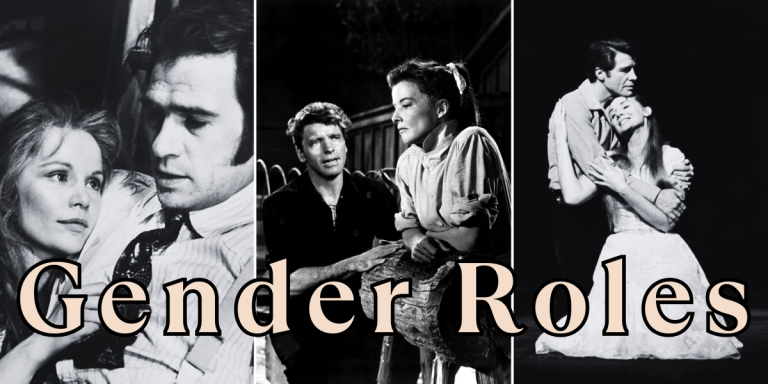
How men can sometimes treat women is reflected in how Lizzie is treated by the men around her. Casual dismissiveness, ridicule, and rigid expectations reveal how deeply ingrained attitudes can harm individuals without overt malice.
In the film "The Rainmaker", men’s power is not expressed through obvious cruelty or villainy.
Instead, it operates through casual dismissiveness, ridicule, and rigid expectations. Subtle behaviors that reveal how deeply ingrained attitudes toward women shape Lizzie’s world.
The tragedy is not that the men intend harm. It’s that they don’t recognize how much harm they cause.
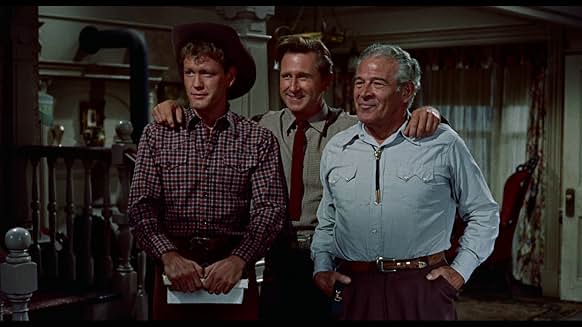
H.C., Lizzie’s father, genuinely loves her. But his love carries authority.
As the father, he sees it as his responsibility to “place” Lizzie with a husband. His power is economic and social. Without him, Lizzie has no clear path forward.
Yet, he rarely sees her as a full adult with agency.
He worries about her prospects as if she were livestock not being purchased not a woman with desires and complexities.
His anxiety about her future reduces her to a problem that needs solving. This isn’t malicious. It’s cultural. But it reinforces the idea that her value lies in marriage.
Noah and Jimmy's treatment of Lizzie is the most openly damaging. They mock her appearance, comment on her lack of suitors, and imply she should be grateful for any male attention.
Noah's words can be particularly damaging. He likely believes he is being practical, even honest.
But his bluntness reveals something deeper: he views Lizzie through a harsh lens shaped by societal standards of beauty and femininity.
He polices her worth based on those standards.
This is where the film exposes how men can wound without recognizing it.
Noah does not hate Lizzie. He simply absorbs and repeats the cultural messaging that a woman’s primary value is her attractiveness and marriageability.
The same goes for Jimmy.
Jimmy does not hate Lizzie. He is only repeating what he has been told.
Regardless, though, their words and actions force Lizzie to internalize what she believes is shameful.
Sheriff File represents another dimension of male power: the power to withhold. He cares for Lizzie but hesitates to act because he fears rejection and vulnerability.
His cautious love leaves her waiting, uncertain, and undervalued.
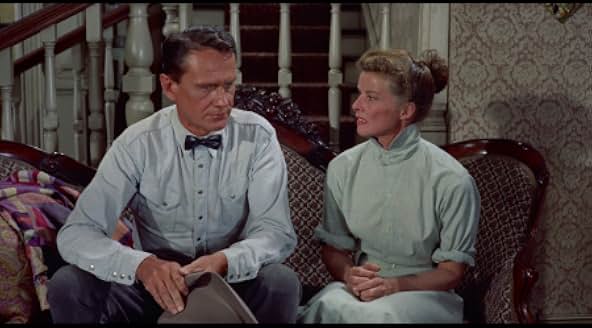
Even his indecision reflects privilege. He can afford to wait. Lizzie cannot.
Time works differently for men and women in this world.
A bachelor is eligible indefinitely. A woman past a certain age is labeled “old maid.”
What makes the film so nuanced is that none of these men are villains.
They are shaped by a culture that:
Lizzie absorbs this worldview. She begins to see herself through it.
Her bitterness and defensiveness are not innate personality traits. They are survival mechanisms against constant diminishment.
The harm comes not from overt abuse but from repetition.
A joke here.
A comment there.
A remark about her age.
Each small act reinforces a hierarchy in which men evaluate and women are evaluated.
Starbuck complicates the theme.
At first, he performs exaggerated masculinity: swagger, confidence, authority.
Yet, unlike the other men, he speaks to Lizzie as if she is desirable and extraordinary.
Whether or not his rainmaking is real, his affirmation is transformative.
He offers her a different perspective.
And in doing so, he reveals how much of Lizzie’s suffering stemmed from the way the other men defined her.
Starbuck doesn’t “save” Lizzie. She ultimately chooses for herself.
But, he exposes how limited the other men’s vision of her has been.
"The Rainmaker" suggests that men’s power often operates invisibly. It’s woven into tone, assumptions, and expectations rather than dramatic acts of control.
The men love Lizzie. They don’t intend to hurt her. Yet, their casual dismissiveness and rigid standards shape her self-worth.
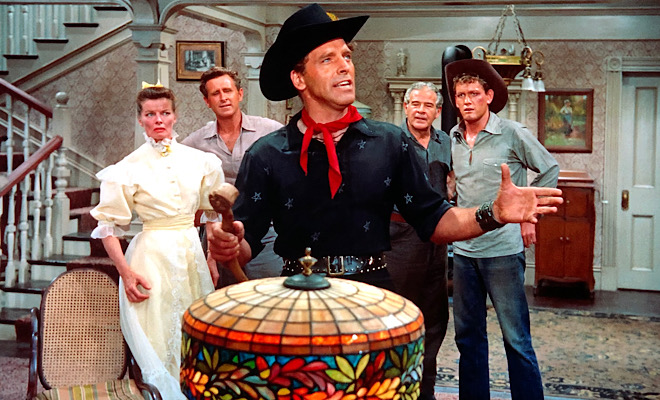
The film doesn’t condemn men outright. It critiques a system. It asks:
In Lizzie’s journey, the film reveals that the most powerful change is not external rain but the breaking of internalized beliefs born from a world where men hold the authority to define a woman’s value.
I hope you learned something new! check out some of my other blogs and learn more about the world of musical theatre 🙂 See you later!