DISCOVER THE WORLD OF MUSICAL THEATRE WITH ME
DISCOVER THE WORLD OF MUSICAL THEATRE WITH ME


The play examines family dynamics particularly the protective, yet sometimes stifling, love of Lizzie's father and brothers.
In the play "The Rainmaker", family is both refuge and restraint.
N. Richard Nash, the writer of the story, builds the Curry household as a place of fierce loyalty and deep affection, but also as a space where love can unintentionally limit growth.
Through Lizzie’s relationships with her father and brothers, the play explores how protection can become confinement and how genuine love sometimes requires letting go.
H.C. Curry, Lizzie’s father, represents steady, tender devotion.
He loves his daughter deeply and aches over her loneliness. His concern isn’t cruel or dismissive. He wants her safe, provided for, and married so she won’t face life alone.
In a harsh, drought-stricken world, marriage feels like security.
Yet his love, though gentle, reinforces Lizzie’s insecurity.
By worrying so openly about her “future,” he unintentionally confirms her fear that she is undesirable or incomplete. H.C. sees her as precious, but he also sees her as vulnerable. His protectiveness, while heartfelt, subtly suggests she cannot thrive independently.
The play shows that even the softest love can still shape someone’s self-perception in limiting ways.
Lizzie’s brothers express their care differently.
Jimmy often tries to keep peace, while Noah is more rigid and controlling.
Noah in particular views Lizzie through a practical lens: she needs a husband; the family needs stability; emotions must not override reason. His worldview is rooted in responsibility, but it leaves little room for Lizzie’s inner life.
Noah’s protectiveness becomes stifling because it denies Lizzie agency.
He assumes he knows what’s best.
In trying to guard the family’s reputation and security, he attempts to control Lizzie’s choices. His love is real, but it is filtered through authority and expectation.
The result is tension: Lizzie feels unseen and unheard within the very family that claims to care for her most.
The Curry family is tight-knit, and their identity is collective.
They work together, endure drought together, and face hardship together.
But this unity also means individual dreams can be overshadowed by group survival.
Lizzie’s yearning for love, self-worth, and possibility clashes with the family’s focus on practicality and endurance.
The arrival of Starbuck disrupts this balance.
He doesn’t replace her family’s love, but he offers something they cannot: belief in her.
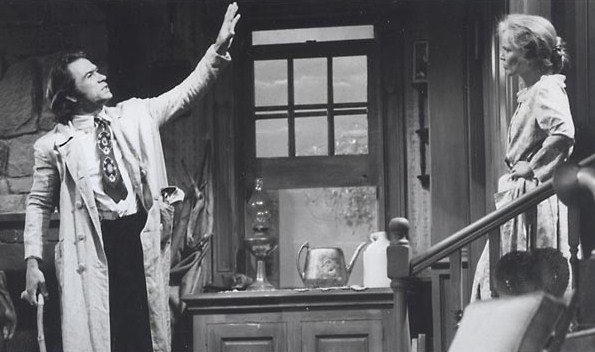
While her family worries about her future, Starbuck insists she is already extraordinary.
That contrast exposes what the family has unintentionally withheld: not affection, but affirmation.
If Noah represents rigid protection and Jim represents conflicted compassion, H.C. Curry represents something even more complicated: loving vulnerability.
He is the emotional center of the Curry household, and through him, "The Rainmaker" explores how parental love can be both deeply affirming and unintentionally wounding.
H.C. is not authoritarian. He is not harsh. In fact, he is almost painfully gentle.
He worries about Lizzie’s future, not because he sees her as a burden, but because he sees her as precious.
He fears what will happen to her when he is gone.
In a world shaped by drought and economic hardship, he equates marriage with safety.
But this is where the tension lies:
His anxiety about her loneliness reinforces her belief that she is somehow lacking.
Unlike Noah, H.C. does not try to control Lizzie outright. Instead, his love manifests as concern, as pleading, as quiet sorrow. He wants her to be happy. Yet, in repeatedly framing her unmarried state as a problem to be solved, he mirrors the societal pressure that wounds her.
He doesn’t mean to. That’s what makes it tragic.
H.C.’s protectiveness is also rooted in guilt. He feels responsible for Lizzie’s situation.
He wonders if he has failed her somehow: failed to provide opportunities, failed to make the farm prosperous enough, failed to secure her future.
This sense of failure deepens the emotional weight of his love. He is aging. The drought threatens everything. His sons argue. And Lizzie, his only daughter, seems unhappy.
His fear isn’t just about her being unmarried. It’s about his inability to guarantee her security.
That powerlessness is key.
Unlike Noah, who tries to exert control, H.C. feels the limits of his authority. He cannot force rain. He cannot force love. He cannot force time to slow down. So he clings to what he can imagine controlling: finding Lizzie a husband.
In this way, H.C. becomes a symbol of parental fragility. He is strong in his devotion, but fragile in his fear.
What makes H.C. particularly moving is that Lizzie knows he loves her. There is no emotional coldness between them. Their bond is real. But it is shaped by shared sadness.
Lizzie longs to be seen as desirable, vibrant, and capable of passion. H.C. sees her as good, dependable, and worthy, but he frames her worth in terms of needing protection. He cherishes her, but he does not always recognize her hunger for self-definition.
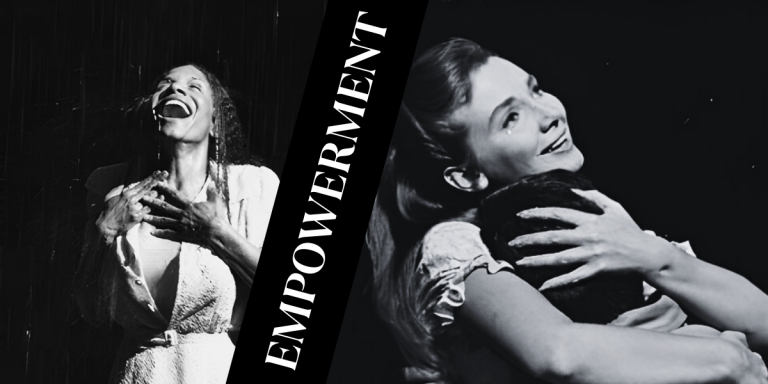
The turning point in the play comes when H.C. begins to trust her judgment. When he allows her to choose for herself, his love transforms from protective to empowering.
H.C.’s arc is subtle but profound. He must learn that love is not the same as shielding someone from risk. True love, especially parental love, requires faith not just in the world, but in the child.
By the end of the play, H.C. begins to understand that Lizzie does not need to be rescued. She needs to believe in herself. And that belief cannot be handed to her. It must be chosen.
In this sense, H.C. embodies one of The Rainmaker’s central truths:
Family love is foundational, but it must evolve. Protection is necessary but so is trust. And sometimes the bravest thing a parent can do is step aside and allow their child to step forward.
H.C. Curry’s love is never in doubt. What changes is his understanding of how that love must look.
In "The Rainmaker", Noah and Jim Curry represent two very different expressions of masculine responsibility within a struggling family.
Both love Lizzie. Both believe they are acting in her best interest.
But the way they express that love reveals the tension between protection and control, duty and compassion.
Noah, the older brother, carries the weight of the farm and the family’s future on his shoulders.
In a drought-stricken world where survival feels uncertain, he clings to practicality.
To him, marriage is not romance. It is security. Stability. A solution.
His protectiveness of Lizzie stems from fear:
Noah’s worldview is rigid, because structure feels safe. He distrusts Starbuck not just because he suspects fraud, but because Starbuck represents chaos, fantasy, and emotional risk. Noah cannot tolerate risk when survival is already fragile.
But here’s the tragedy: in trying to protect Lizzie, Noah denies her agency. He speaks over her, assumes he knows what she needs, and frames her future as a practical problem to be solved. His love becomes paternalistic. He doesn’t mean to diminish her.
Noah represents a common dynamic in families under pressure: when resources are scarce, emotional nuance shrinks. Security takes priority over self-discovery. His protectiveness is sincere, but it is suffocating because it leaves no room for Lizzie to define herself.
Jimmy, by contrast, is softer and more conflicted.
He shares Noah’s sense of responsibility, but he does not share his rigidity.
Jimmy feels deeply even when he doesn’t articulate it well.
Where Noah confronts, Jimmy hesitates.
Where Noah controls, Jimmy questions.
Where Noah sees problems, Jimmy sees people.
Jim’s love for Lizzie is more empathetic. He recognizes her hurt. He understands her loneliness more intuitively. But his weakness is passivity. He rarely challenges Noah directly, even when he senses his brother is being too harsh.
This makes Jim a subtle but important figure. He embodies the internal conflict between tradition and change. He is caught between loyalty to his brother’s authority and compassion for his sister’s independence.
In many ways, Jim represents the possibility of growth within the family structure. He is not as quick to dismiss Starbuck. He is capable of imagining that Lizzie might want something more than safety.
Noah and Jimmy together illustrate two responses to hardship:
The play doesn’t vilify Noah, nor does it idealize Jimmy.
Instead, it shows how family roles can harden under pressure. Drought doesn’t just dry up land. It narrows options, and it magnifies fear.
Noah believes love means guarding the gate.
Jimmy senses love might mean opening it.
Ultimately, Lizzie’s journey forces both brothers to confront their limitations.
Noah must learn that love is not ownership.
Jim must learn that compassion requires courage.
Their evolution however subtle reinforces one of the play’s central ideas: family love must expand, not constrict.
To truly support Lizzie, they must see her not as someone to manage, but as someone capable of choosing her own destiny.
In that way, Noah and Jim are not obstacles to Lizzie’s empowerment. They are part of the crucible that shapes it.
Ultimately, "The Rainmaker" suggests that the most profound expression of family love is trust. H.C. and the brothers must loosen their grip and allow Lizzie to choose her own path even if that path leads away from their protection.
When they begin to respect her autonomy, their love becomes empowering rather than limiting.

The play does not condemn the Curry family.
On the contrary, it portrays them as deeply human. Their love is messy, flawed, and sincere.
But through Lizzie’s journey, Nash argues that family’s role is not to shield someone from life, but it is to prepare them for it.
In that sense, "The Rainmaker" ultimately affirms that family matters not because it controls destiny, but because it provides the foundation from which a person can finally step into their own.
I hope you learned something new! Check out some of my other blogs and learn more about the world of musical theatre 🙂 See you later!