
DISCOVER THE WORLD OF MUSICAL THEATRE WITH ME
DISCOVER THE WORLD OF MUSICAL THEATRE WITH ME

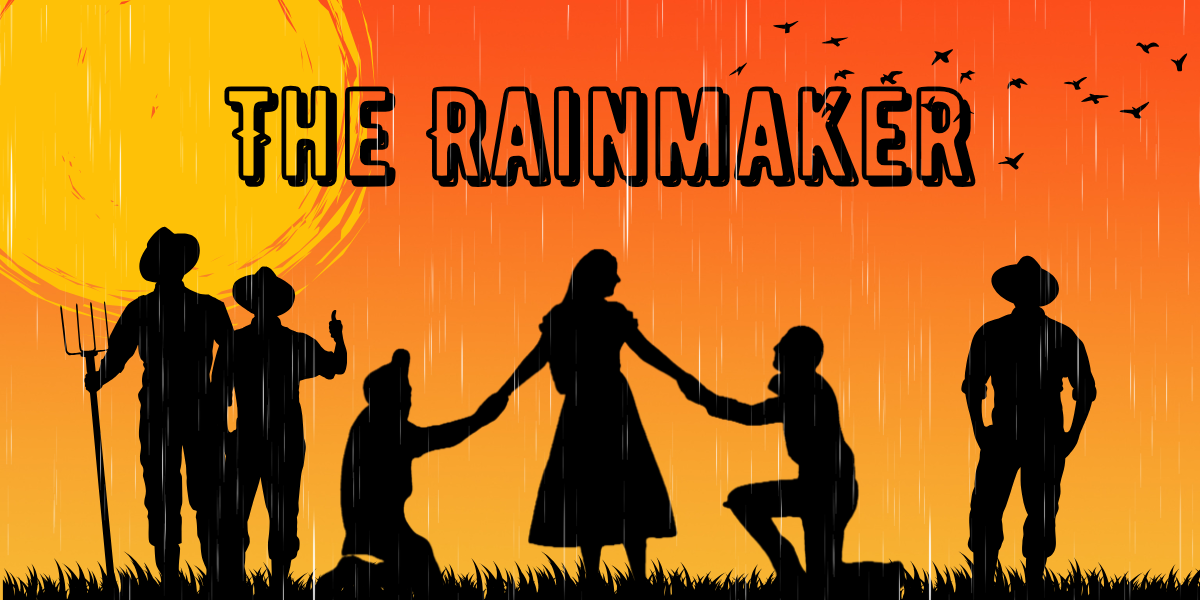
"Are you plain, Lizzie?"
"No... I'm beautiful."
Bill Starbuck to Lizzie Curry
The Rainmaker
"The Rainmaker" is a play that revolves around the struggle between hard-earned realism and the human need for hope. Set during a devastating drought in the 1930s, the story centers on the Curry family: H.C., the caring father, Noah, the practical eldest child, the playful youngest child, Jimmy, and Lizzie.
Just plain, old Lizzie.
A bright, sharp-tongued sister whose independence and lack of conventional beauty has caused her to be an outsider in the town. When Bill Starbuck, a smooth-talking conman arrives claiming he can make it rain, his presence shakes up the family in more ways than one. The play unfolds an emotional journey about belief, dignity, and the courage to hope even when logic insists otherwise.
WANT TO WATCH THE PLAY?
The Basics
"The Rainmaker" is a play written by N. Richard Nash in the early 1950s and then set into production by director Joseph Anthony and producer Ethel Linder Reiner.
The story is a romantic drama set in a drought-stricken Midwestern town during the Great Depression. The story centers on Lizzie Curry, an intelligent, plain-spoken woman in her late twenties who is deeply insecure about her appearance and fears she will never be loved or married. She lives with her practical, hardworking family who worry about her future but struggle to understand her emotional needs.
The family’s fragile stability is disrupted by the arrival of Bill Starbuck, a charming, fast-talking con man who claims he can bring rain for a fee. Though the townspeople and Lizzie’s family are skeptical, Starbuck’s confidence and eloquence begin to stir something long dormant in Lizzie: hope. Unlike others, Starbuck sees Lizzie not as a problem to be fixed, but as a woman capable of believing in herself.
"The Rainmaker" explores themes of hope, self-worth, illusion, and personal agency against the backdrop of a devastating drought. The absence of rain reflects the emotional stagnation of the characters, particularly Lizzie Curry, who has internalized society’s narrow standards of beauty and believes herself unworthy of love. Bill Starbuck’s arrival introduces the power of belief and illusion, raising questions about whether hope born from deception can still produce genuine transformation. Though Starbuck is a fraud, his faith in Lizzie awakens her confidence and sense of choice, proving that empowerment must ultimately come from within.
N. Richard Nash
G
3
Original Play - 1954
Drama, Romance, Comedy
1930s, late summer, small western town
Small Cast: 1 F, 6 M
None
Male Cast, Small Cast, Adults, Young Adults,
Professional Theatre, College Theatre, Community Theatre, High School Theatre

In the early 1950s, playwright N. Richard Nash wrote a play titled, "The Rainmaker". The play was then picked up by director Joseph Anthony and producer Ethel Linder Reiner, and after rehearsals, the show was opened to the public at Cort Theatre in New York City on October 28, 1954. It ran for 125 performances and was received well by critics and audiences alike.
Fun Facts:

The play is set in the American West during the Great Depression, where a relentless drought plagues the isolated Curry family ranch and mirrors the emotional barrenness of its inhabitants. When Bill Starbuck, a charismatic drifter claiming to be a rainmaker, arrives offering hope for a price, he disrupts the family’s fragile stability, particularly affecting Lizzie Curry, an intelligent woman who believes she is unlovable.
The Curry family is suffering from a paralyzing drought that is killing their cattle. The family patriarch, H.C. Curry, and his two sons, Noah and Jimmy, worry about Lizzie, H.C.'s daughter and the family housekeeper. Lizzie has just returned from an unsuccessful trip to visit relatives in another town, arranged to find her a husband. The men are concerned she will become an old maid. They decide to invite the local deputy sheriff, File, who is a widower, to supper in an attempt to matchmake.
H.C., Noah, and Jimmy visit File. They awkwardly try to convince him to come to dinner to meet Lizzie. File is reluctant, acknowledging that everyone in town knows his wife left him for another man six years ago, but he eventually agrees to visit later that evening.
The men come back home defeated. Lizzie, upset over the situation, starts to face a reality where she will never be happy when a charismatic, smooth-talking man named Bill Starbuck appears. He claims to be a professional rainmaker and promises to bring rain in 24 hours for a fee of $100. Lizzie is skeptical, but H.C. and Jimmy are intrigued. Starbuck starts convincing H.C. that the hope is worth the gamble, and H.C. decides to pay him the family's last $100.
Starbuck begins his rainmaking ritual, which involves a list of specific instructions: painting a big white arrow on the roof, hammering a post into the ground, and banging on big brass drums. Noah remains deeply cynical about Starbuck, but H.C. and Jimmy engage in the ritual. While the boys are distracted, Lizzie confronts Starbuck about his deception. However, Starbuck challenges Lizzie right back, and the two have a fight.
File is distracted, frustrated and indecisive to the point where Sheriff Thomas convinces File to go have dinner with the Curry family.
Lizzie opens up about her frustrations to H.C., and H.C. does everything he can to cheer Lizzie when File shows up. H.C. leaves the two alone, and the two have a quiet conversation finding they have a lot more common than previously thought. However, feeling vunerable, Lizzie makes a fool of herself driving File away. The Curry men rush onto the scene trying to figure out what happened, and everything comes to ahead. Fights break out, words are said, and everything feels hopeless. Starbuck manages to stop the fight with Jimmy running away, Noah walking out, and H.C. trying to console Lizzie.
Lizzie despite her better judgment ends up going to Starbuck for comfort, and Starbuck who senses her longing gives her his attention. He convinces her that she possesses a unique beauty and worth, something she has never believed before. In a moment of connection, Lizzie's self-doubt begins to fade, and she and Starbuck share a romantic encounter.
The family reflects on the events of the night before. Jimmy comes back as a changed man as he finally got to get together with the girl he liked. But, the moment is interrupted when File and Thomas show up looking for Starbuck. Knowing Lizzie is with him, H.C. lies. The sheriffs don't believe him, but they leave the house. Angry, Noah determines to go get Starbuck himself, but H.C. stands up for Starbuck asserting that the man brought belief and hope back into their lives especially Lizzie's.
Starbuck admits to Lizzie that he can't actually make rain, but Lizzie accepts this realizing he has given her something more valuable than rain: hope. The two decide they want to be together and rush to tell the others.
Lizzie tells her family the good news, but then, File shows up again to arrest Starbuck. However, the Curry family defend Starbuck, and reluctantly, File lets Starbuck go. Starbuck asks Lizzie to come with him, but before she can answer, File, in desperation, asks her to stay with him. Lizzie decides to stay, and Starbuck accepts this answer. As he disappears, the sound of thunder rumbles in the distance, and the first drops of rain begin to fall. Everyone celebrates with a renewed sense of hope.
is an intelligent, capable woman in her late twenties living on her family’s drought-stricken ranch in the American West during the Great Depression. Practical, sharp-witted, and emotionally guarded, she has been labeled “plain” for so long that she has internalized the belief that she is unlovable. While she outwardly presents herself as competent and independent, Lizzie secretly longs for intimacy, romance, and the freedom to see herself as worthy of love. The arrival of Bill Starbuck awakens her confidence by challenging her self-image and treating her as desirable, forcing her to confront the difference between illusion and self-belief. By the end of the play, Lizzie emerges transformed, not because she has been “fixed” by a man, but because she chooses to claim her own worth, balancing hope with honesty and stepping into a future defined by self-respect and emotional courage.
is a charming, fast-talking drifter who arrives at the Curry ranch during a devastating drought, claiming to be a professional rainmaker. Charismatic, perceptive, and theatrically confident, he survives by selling hope to desperate people, blurring the line between calculated deception and genuine belief. Though outwardly a con man, Starbuck possesses a keen emotional intelligence and an uncanny ability to read others’ deepest needs particularly Lizzie Curry’s longing to feel seen and valued. His attention sparks Lizzie’s transformation, but his methods raise moral questions about manipulation, illusion, and responsibility. Beneath the bravado lies a man who doesn't fully believe in his own performance and ultimately recognizes that real change must come from within, choosing to leave Lizzie empowered rather than dependent.
is a caring but traditional father who wants to see his children secure, particularly Lizzie, whom he worries may end up alone. His concern leads him to push her toward a conventional marriage with Sheriff File, hoping it will bring her happiness. However, as the play unfolds, H.C. begins to see that Lizzie’s happiness lies not in convention but in embracing her own dreams and desires, especially after witnessing the impact Starbuck has on her self-worth. By the end, H.C. grows to support Lizzie’s journey toward self-acceptance and the possibility of love on her terms, realizing that true happiness is found in authenticity rather than conforming to societal expectations.
is the practical, stern older brother who feels responsible for maintaining order within the family, especially concerning his sister Lizzie’s future. His obsession with security leads him to push Lizzie toward a stable but loveless marriage, dismissing anything he considers unrealistic or risky. When Starbuck, the rainmaker, arrives and encourages Lizzie to embrace her dreams and desires, Noah’s worldview is challenged. He initially sees Starbuck as a dangerous influence, yet, as he witnesses the positive impact on Lizzie, he begins to question his own strict outlook. By the end, Noah loosens his grip on control, recognizing that life’s possibilities extend beyond practical security.
is the playful, naïve younger brother who’s often belittled by his older brother, Noah, and made to feel like a "blockhead." Despite his fun-loving nature, these criticisms leave Jimmy deeply insecure, as he yearns to be respected and taken seriously. His turning point comes when he finally stands up to Noah, asserting his worth and challenging the negative labels put on him. Encouraged by Starbuck’s belief in dreams and individual potential, Jimmy begins to see himself differently. By the end, he grows into a more confident, self-respecting young man who values his own individuality, transforming from the overlooked younger brother into someone capable of defining his own worth.
is closed-off, wounded by a past marriage that ended in betrayal, leaving him distrustful and unwilling to pursue relationships. He insists he’s content being alone, masking his deep-seated loneliness and fear of vulnerability. His encounters with Lizzie, who shares his guarded nature, and Starbuck, who represents belief and boldness, begin to challenge his isolation. Starbuck’s encouragement stirs File to confront his pain and acknowledge his desire for connection. By the end, File breaks through his self-imposed barriers, admitting his loneliness and opening himself to the possibility of love with Lizzie. His journey reflects a shift from isolation to a willingness to trust and be vulnerable again, showing the healing power of hope and connection.
is the wise and compassionate sheriff of the town. A charitable man known for his warmth and wry humor, he acts as a mentor and supportive friend to his lonely deputy, File, whom he frequently encourages to abandon his emotional isolation and reconnect with the community. While he is a relatively minor character compared to the rest of the characters, Thomas provides a steady, grounded presence in the play, often serving as a kind-hearted foil to the more cynical characters.
The drought mirrors the family's emotional drought; Starbuck offers hope in a seemingly hopeless situation, challenging their ingrained pessimism.
Starbuck insists that belief is seeing beyond what you know showing how imagination and belief shape reality and choices.
Lizzie learns to see herself as worthy of love, moving from feeling "plain" and fearing spinsterhood to accepting affection.
The play balances the practical need for rain with the metaphorical need for dreams with Lizzie finding a middle ground between her family's strict realism and Starbuck's fantastical promises.
The play examines family dynamics, particularly the protective, yet sometimes stifling, love of Lizzie's father and brothers.
Bill Starbuck uses a variety of subtle and overt manipulation tactics to achieve his goals, particularly in persuading the Curry family to believe in his rainmaking abilities and in shifting Lizzie's self-image.
The play reflects society's attitudes towards single women, and the pressure for women to find worth through marriage. Lizzie’s journey is partly a response to these rigid societal constraints.
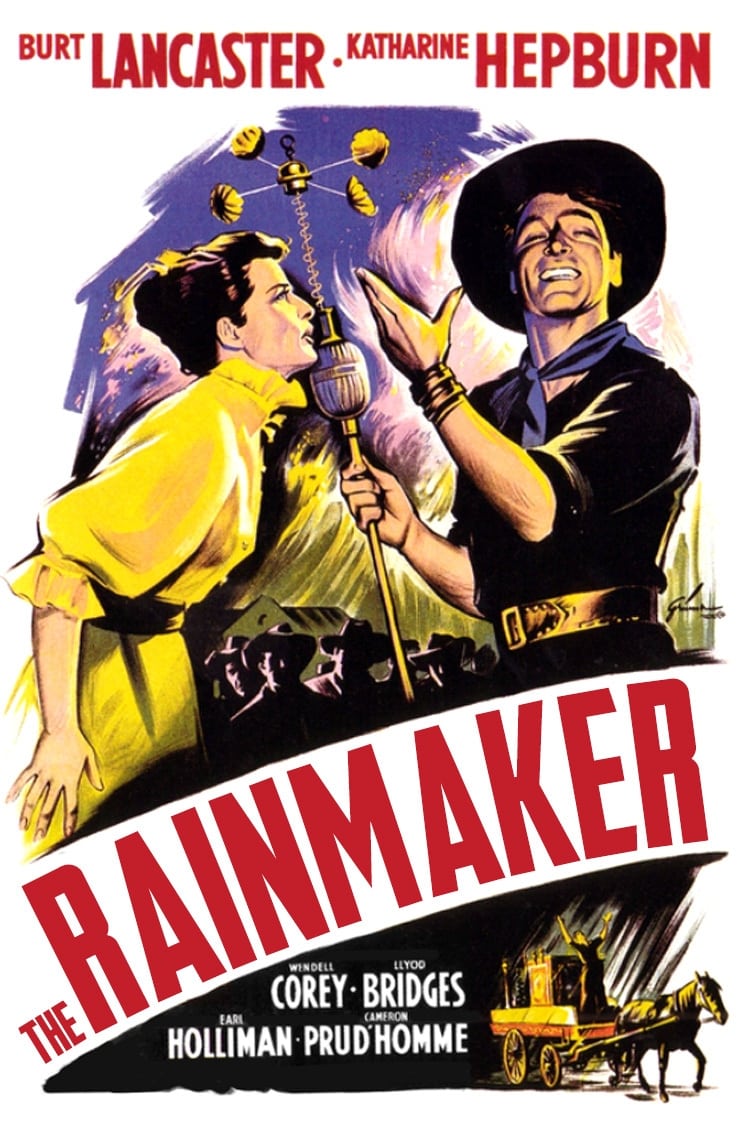
Later on, the story was then adapted into a film written by the same N. Richard Nash and directed again by Joseph Anthony. The film went into theaters on December 13, 2956 starring Burt Lancaster and Katharine Hepburn.
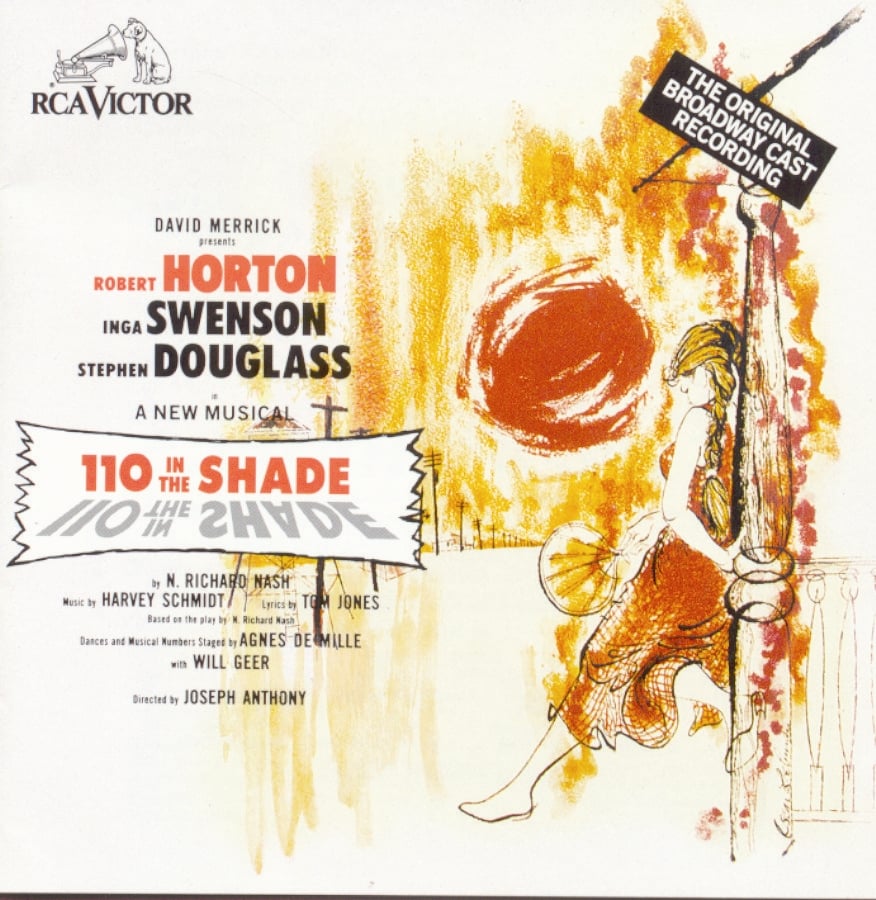
The story was brought back up again to be adapted into a musical with the help of Harvey Schmidt and Tom Jones. This was the duo's Broadway debut after their wildly successful work of the off-Broadway musical "The Fantasticks". Joesph Anthony came back to direct the story along with choreographer Agnes de Mille, producer David Merrick, and set designer Oliver Smith.
After two previews, the production opened on October 24, 1963 at the Broadhurst Theatre. The show was met with positive reviews from critics, but audiences were not as thrilled by the story thus running for a total of 330 performances.
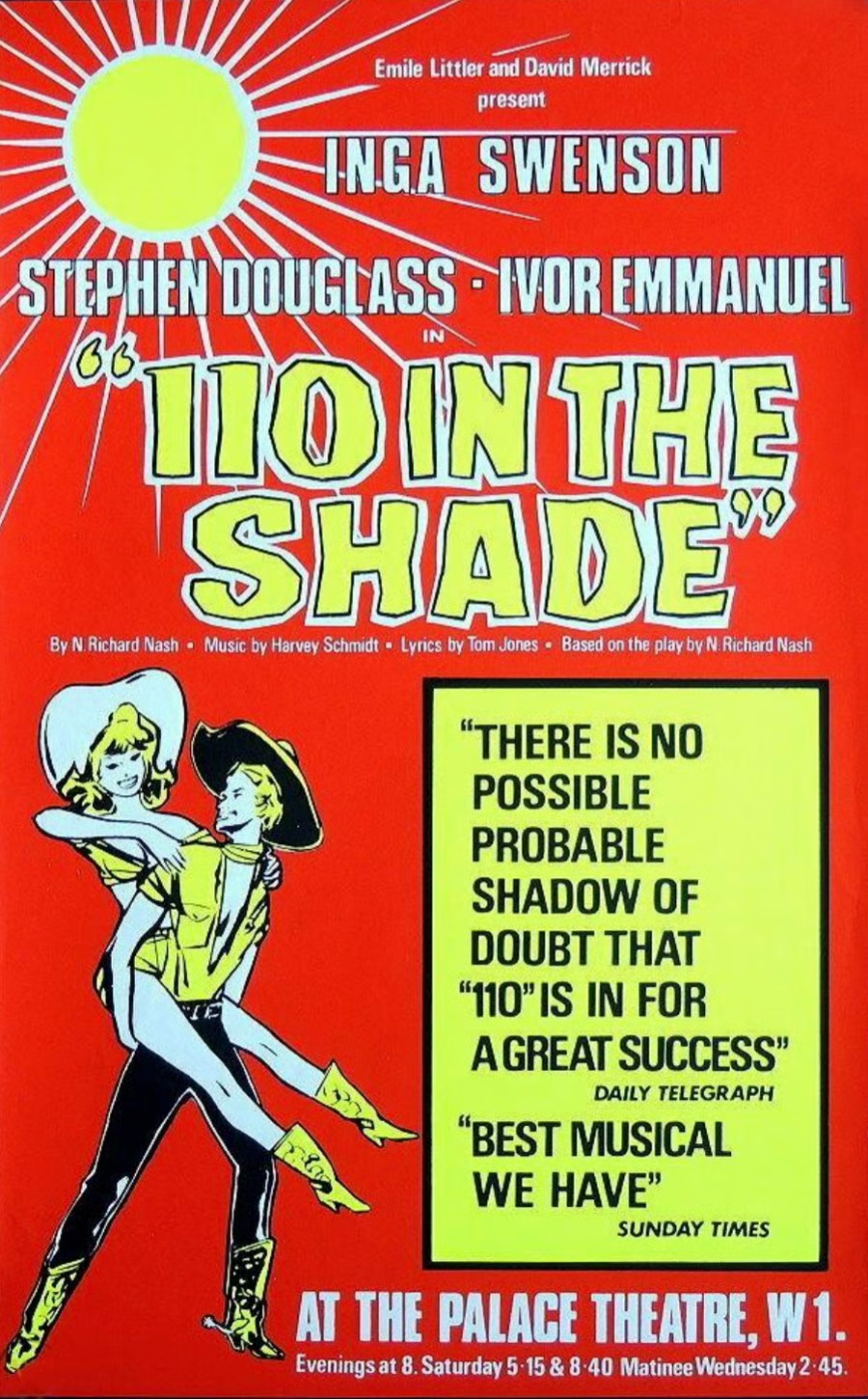
Opened on February 8, 1967, "110 in the Shade" had its first and only West End production at the Palace Theatre.
Not much is known about it, only that it ran for 101 performances.
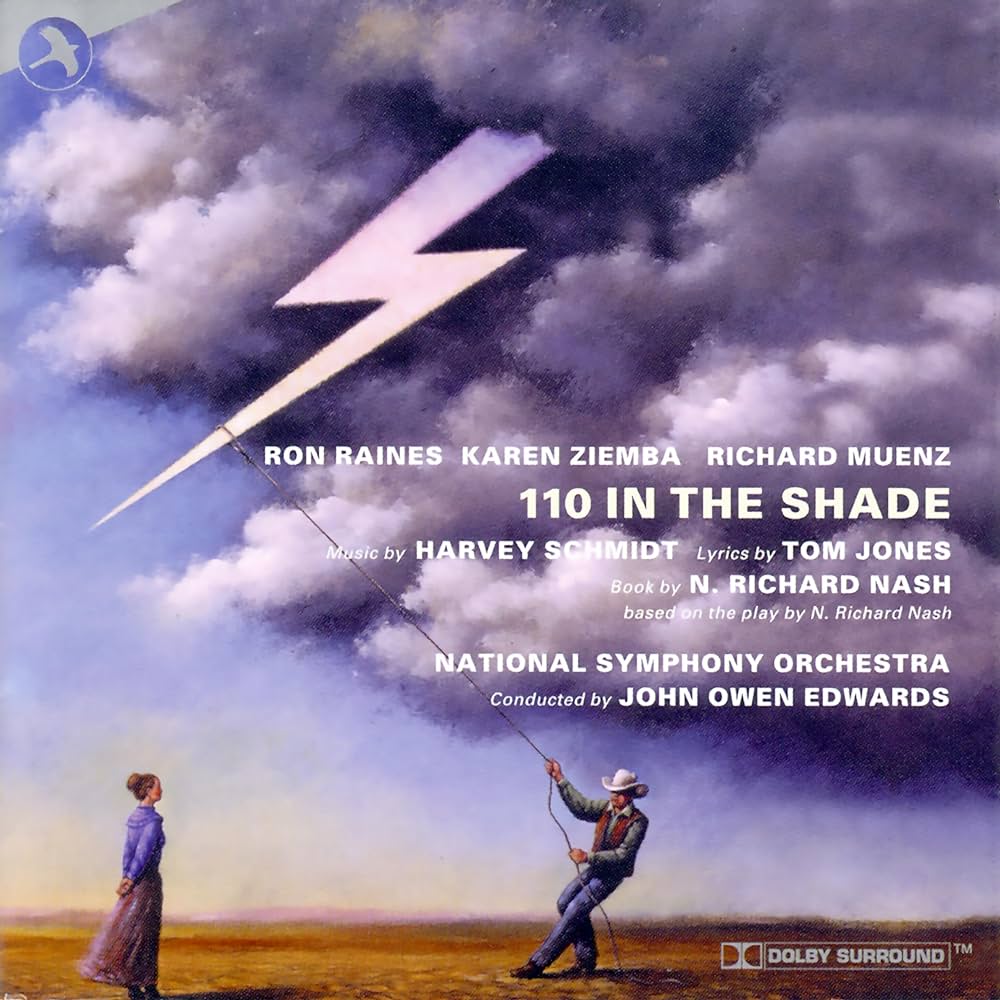
Fittingly, as the Broadway musical is closely linked to opera, the story was adapted into an opera for the New York City Opera in 1992. The production was directed by Scott Ellis, choreographed by Susan Stroman, and starred Karen Zimba as Lizzie Curry.
There is a studio recording of the opera with five bonus tracks, but it wasn't released until 1997.
Fun Fact: The opera orchestra was larger than the Broadway pit orchestra so the score was done better than the original Broadway production.
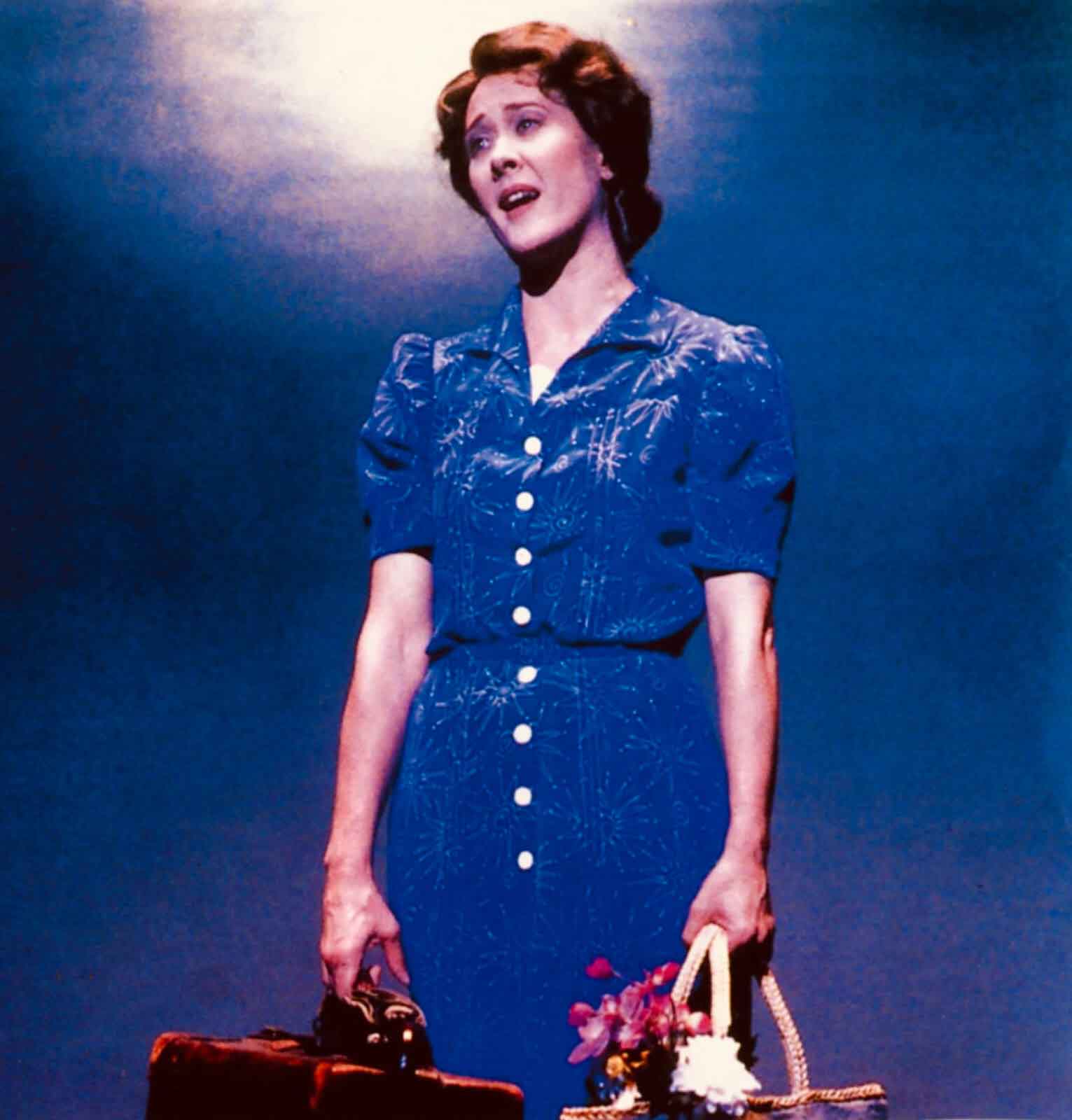
A couple of years later, a concert version was staged at the Fortune Theatre in London directed by Ian Marshall Fisher with Louise Gold as Lizzie Curry. This production was done for the Discovering Lost Musicals Charitable Trust.
Fun Fact: The production only used piano accompaniment.

The show was revived in 2007 by the Roundabout Theater Company opening on May 9, 2007. In charge of this revival was director Lonny Price, designer Santo Loquasto, lighting designer Christopher Akerlind, sound designer Dan Moses Schreier, musical arranger David Krane, and musical supervisor Paul Gemignani. The cast featured star Audra McDonald along with Steve Kazee and John Cullum. The show ran for 27 previews and 94 performances before closing on that same year.
Unfortunately, the show was met with mixed feelings.
I hope you learned something new! Check out some of my other blogs and learn more about the world of musical theatre 🙂 See you later!
No and yes. No, there are no recordings of the original play back in 1954, but there is a professional recording of the 1982 show. As of right now, it's available to watch on YouTube.
If you would like a free script, there are a couple options in Scribd. If you would like to buy a script, you can go to Concord Theatricals, Samuel French Publishing, or Dramatists Play Service.
Lizzie Curry, Bill Starbuck, H.C. Curry, Noah Curry, and Jimmy Curry.
"The Rainmaker" is a romantic drama about the drought-stricken Curry family, where a charismatic con man, Starbuck, arrives promising to bring rain for $100, forcing everyone to confront hope, love, and self-discovery.
N. Richard Nash
2 hours to 2 hours and 20 minutes with an intermission.