
DISCOVER THE WORLD OF MUSICAL THEATRE WITH ME
DISCOVER THE WORLD OF MUSICAL THEATRE WITH ME


"You're afraid of being beautiful."
"I'm afraid to think I am, and I know I'm not."
H.C. Curry to Lizzie Curry
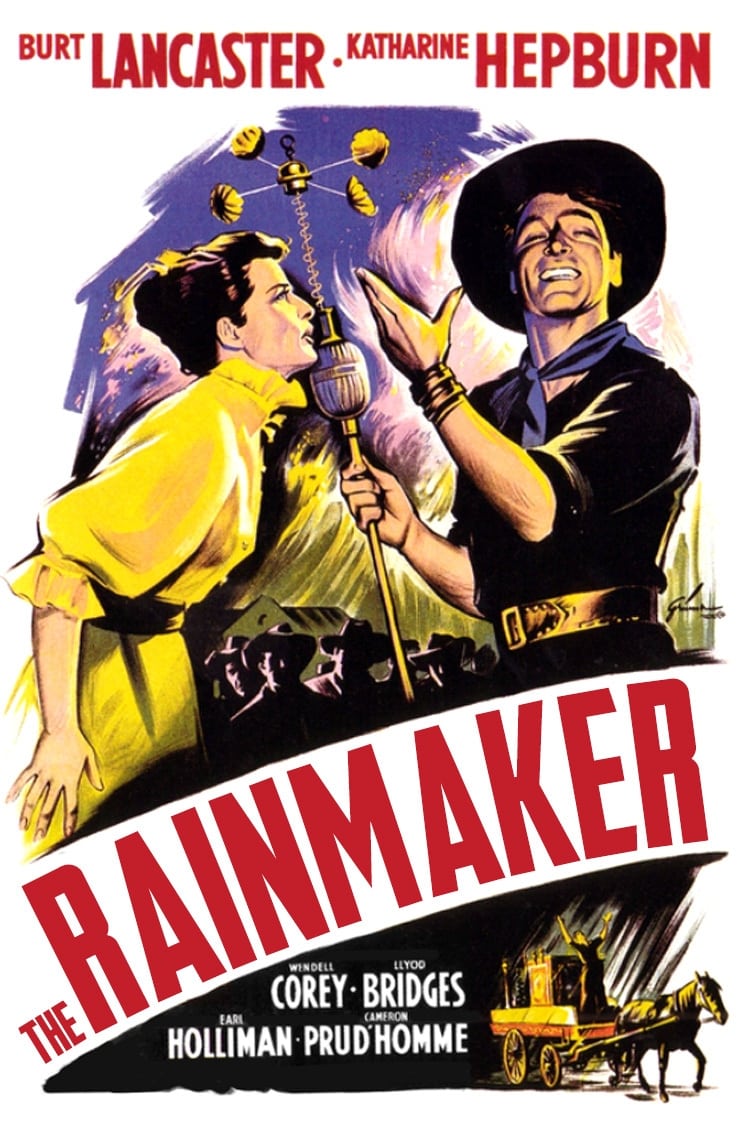
The Rainmaker
In a drought-stricken Western town, a charismatic con man posing as a rainmaker disrupts a skeptical family and a lonely woman’s quiet despair, forcing them to confront whether belief and self-worth can be as powerful as truth.
"The Rainmaker" is a 1956 American western romance film directed and adapted by the same people who directed and wrote the original play version, Joseph Anthony and N. Richard Nash. Alongside the two was producer Hal B. Wallis, cinematographer Charles Lang, editor Warren Low, and composer Alex North.
Most of the film is a direct copy from the play with a few differences: added new scenes, cut out other scenes, and changed a couple of characters arcs and personalities.
The film stars Burt Lancaster, Katharine Hepburn, Wendell Corey, Lloyd Bridges, and Earl Holliman.
The film revolves around a drought-stricken Western town and the emotional drought in the lives of the people who inhabit it, particularly Lizzie Curry, an intelligent but insecure woman who believes she is doomed to spinsterhood. When Bill Starbuck, a charismatic con man claiming he can bring rain, arrives at the Curry ranch, he stirs hope, conflict, and self-reflection among the family and townsfolk. As Starbuck’s charm clashes with the pragmatism of Lizzie’s father and brothers, the story explores themes of faith versus skepticism, illusion versus truth, and the human need to believe in something larger than oneself. Ultimately, while the question of whether Starbuck truly can make it rain remains ambiguous, his greatest impact is helping Lizzie recognize her own worth and claim confidence in herself, making the film as much about emotional renewal as physical rain.
N. Richard Nash
Joseph Anthony
Charles Lang
Not Rated
2 hours and 1 minute
Production Company - Hal Wallis Productions
Distributed - Paramount Pictures
Movie Theatres - December 13, 1956
Western, Romance, Drama
Depression Era, small town in Kansas
Not a musical. No singing or dancing.

In the early 1950s, playwright N. Richard Nash wrote a play titled, "The Rainmaker". The play was then picked up by director Joseph Anthony and producer Ethel Linder Reiner, and after rehearsals, the show was opened to the public at Cort Theatre in New York City on October 28, 1954. It ran for 125 performances and was received well by critics and audiences alike.
The story was then adapted into a film written by the same N. Richard Nash and directed again by Joseph Anthony. The film went into theatres on December 13, 1956 and received mixed reviews from critics and audiences alike. It grossed over $2.1 million.
Fun Facts:
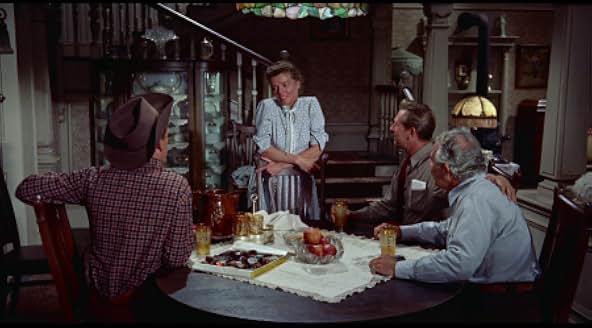
The play is set during a severe drought in a rural Western town. The Curry family, consisting of H.C. Curry, his sons Noah and Jim, and daughter Lizzie, struggles with the lack of rain. Lizzie, who is unmarried and seen as plain by her family and the townsfolk, is dealing with loneliness. Her brothers and father are worried about her future, particularly Noah, who is practical and pessimistic about her chances of ever marrying. Sheriff File, a seemingly eligible bachelor, has no interest in marriage, complicating the family's efforts to find Lizzie a suitor.
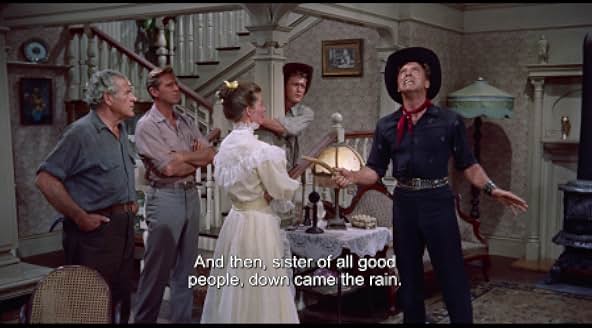
The arrival of Starbuck, a charming and flamboyant con man who claims to be a rainmaker, changes the dynamic. He offers to bring rain to the parched land for $100, which the practical Noah dismisses as a scam. However, H.C. Curry, desperate for a solution, decides to take a chance on Starbuck. Meanwhile, Lizzie faces her own internal struggles with self-worth and her future.
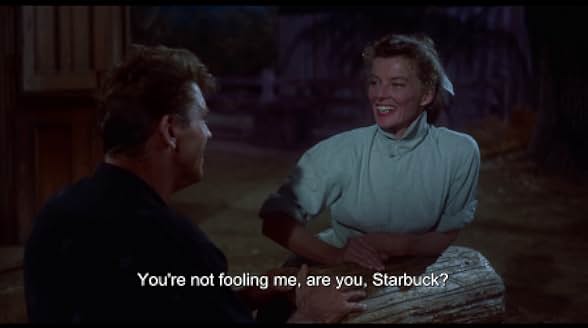
The emotional turning point occurs when Starbuck encourages Lizzie to embrace her beauty and self-confidence. Through their interactions, Lizzie begins to see herself in a new light. Simultaneously, the pressure mounts as the family awaits whether Starbuck’s promise of rain will come true, creating a tense atmosphere.

Lizzie’s transformation leads her to realize that she is worthy of love and acceptance, with or without a suitor. Starbuck also shows a more vulnerable side, revealing that his boastful persona is largely an act. The family begins to question their initial skepticism of Starbuck. Lizzie and Starbuck share a brief, tender moment of connection.
Starbuck prepares to leave the town, but before he does, rain finally falls, fulfilling his promise in a poetic sense. Though Starbuck and Lizzie part ways, Lizzie’s newfound confidence suggests that her future is brighter. Sheriff File expresses interest in Lizzie, hinting at the possibility of a genuine romantic connection. The family is left with hope as both the drought and Lizzie’s emotional drought come to an end.


Lizzie is an intelligent, capable, and sharp-tongued woman in her late twenties to early thirties who has internalized the belief that she is unattractive and destined to be alone. Living in a society that measures women by marriage and beauty, she hides her vulnerability behind wit and defensiveness. Beneath her insecurity is a strong, perceptive, deeply emotional person longing to be seen and loved. Over the course of the story, Lizzie undergoes the greatest transformation, gaining self-confidence and reclaiming her sense of worth.
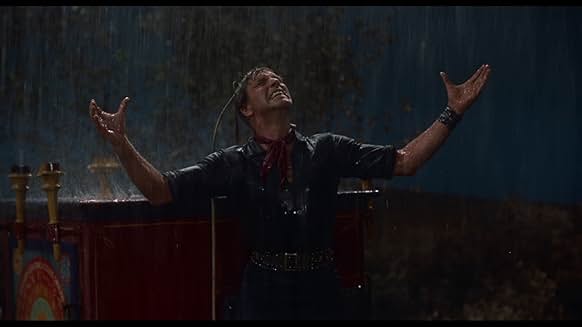
Bill Starbuck is a charming, fast-talking drifter and self-proclaimed rainmaker whose confidence borders on theatrical bravado. He is a consummate con man—observant, persuasive, and emotionally intuitive—but not without conscience. While his claims are dubious, his belief in the power of hope and imagination feels genuine. Starbuck’s true ability lies not in controlling the weather, but in awakening belief in others, particularly Lizzie, whom he treats with sincerity and respect.
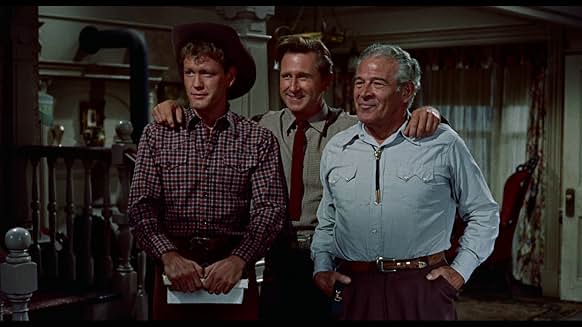
H.C. is the practical, no-nonsense patriarch of the Curry family. Hardened by years of ranch life and responsibility, he values logic, work ethic, and survival above sentiment. Though he cares deeply for his children, he struggles to express emotion and is resistant to anything that feels impractical or deceptive. His skepticism toward Starbuck reflects his fear of false hope in a world where hope can be costly.
Jimmy is the most contemplative and gentle of the brothers. He is weary, emotionally restrained, and quietly desperate for relief from the drought and the family’s burdens. More open than the others to Starbuck’s promises, Noah represents the human need to believe when circumstances become unbearable. His vulnerability contrasts with the family’s usual stoicism.
Noah is more grounded and pragmatic than Jimmy, but less rigid than Sheriff File. He is loyal to the family and focused on keeping the ranch afloat, often serving as a middle ground between belief and skepticism. Jim is cautious, practical, and shaped by responsibility rather than dreams.
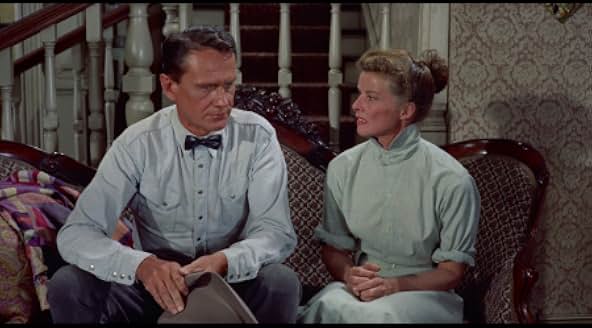
Sheriff File is aggressive, controlling, and deeply suspicious of outsiders. He prides himself on authority, logic, and order, often masking insecurity and emotional repression with hostility. File is openly contemptuous of Starbuck and frequently dismissive of Lizzie, reinforcing the societal attitudes that have damaged her self-esteem. He represents rigid skepticism and the dangers of emotional cruelty disguised as realism.
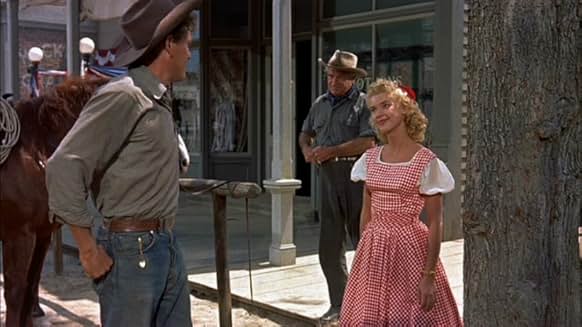
Snookie is a young, pretty, and socially confident woman who represents the conventional ideal of femininity within the drought-stricken town. She is lively, flirtatious, and comfortable with attention particularly from men like Jimmy Curry who openly adores her. She values excitement, romance, and surface-level charm over introspection, serving as a sharp contrast to Lizzie’s intelligence and emotional complexity.
Critics and audiences alike found "The Rainmaker" to be a charming, sincere film with a few good performances here and there particularly Burt Lancaster, Katharine Hepburn, and Earl Holliman's performances, but there was some criticism over the adaptation, it's pacing, it's on-the-nose symbolism, and forced chemistry.
Many critics noted the movie felt more like a filmed play rather than a movie with the sets feeling staged and the dialogue sounding unnatural.
While some critics found the performances overall good (Hepburn's performance was powerful and Lancaster's performance was fun), others thought Hepburn was too old to play Lizzie making her acting seem odd, and Lancaster's acting felt over the top. Furthermore, their chemistry for many critics was unconvincing and forced.
Critics felt the pacing was off. Some found it too slow. And most reviews felt the symbolism like the drought representing loneliness was too obvious.
Based on research, it seems audiences adored Lancaster and Hepburn's performances and enjoyed their romance despite the cheesiness.
Some viewers didn't care that the film felt too "stagey" with many enjoying the over the top dialogue and obvious symbolism.
In conclusion, the film had a mixed reception, but depsite the flaws, it was a hit for the stars and a hit for movie and theatre lovers alike. Nowadays, it is seen as a beloved classic for many.
Starbuck operates in half-truths and performance, yet his “illusion” produces genuine emotional change. The film questions whether something must be factually true to be meaningful, especially when hope and dignity are at stake.
Surrounded by a society that equates a woman’s value with youth, beauty, and marriage, Lizzie internalizes cruelty and rejection. Her journey toward self-acceptance is the emotional core of the film, showing that empowerment often comes from within rather than external validation.
The drought mirrors the characters’ emotional barrenness, and Starbuck’s arrival offers a lifeline not just for rain but for renewal. Even fragile hope, the film suggests that hope can sustain people long enough to endure or change.
How men can sometimes treat women is reflected in how Lizzie is treated by the men around her. Casual dismissiveness, ridicule, and rigid expectations reveal how deeply ingrained attitudes can harm individuals without overt malice.
Whether or not Starbuck truly causes the rain, the characters especially Lizzie emerge changed. The rain becomes a symbol not just of physical relief, but of emotional rebirth, underscoring the idea that belief can restore what hardship has stripped away.
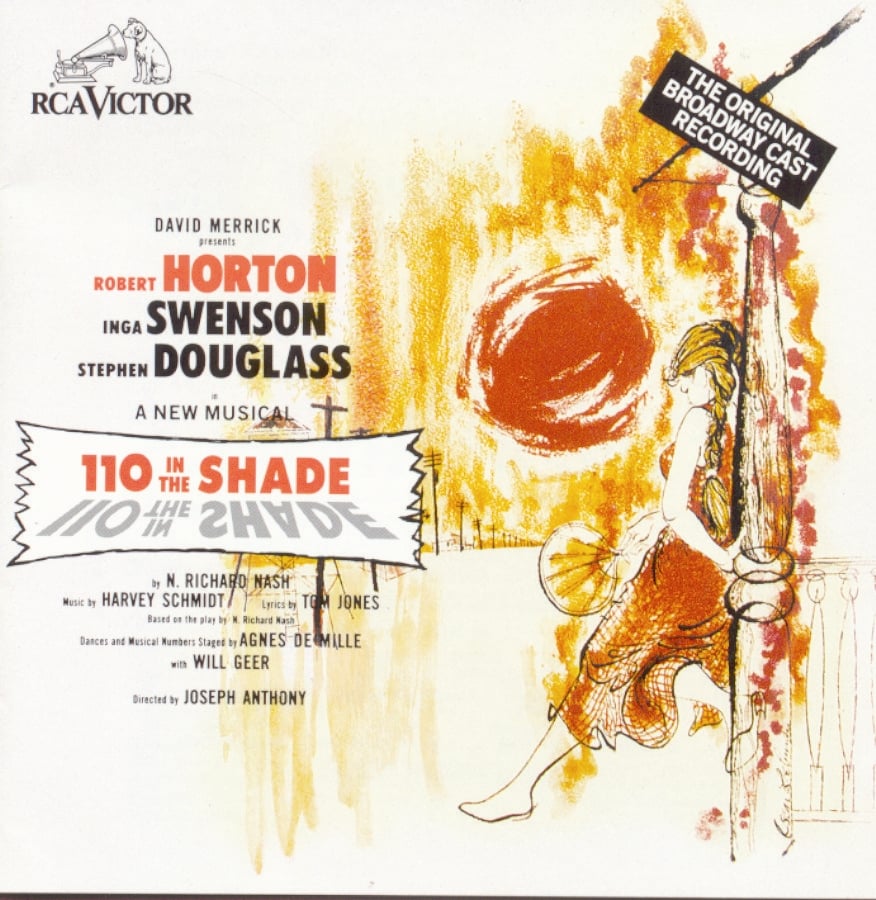
The story was brought back up again to be adapted into a musical with the help of Harvey Schmidt and Tom Jones. This was the duo's Broadway debut after their wildly successful work of the off-Broadway musical "The Fantasticks". Joseph Anthony came back to direct the story along with choreographer Agnes de Mille, producer David Merrick, and set designer Oliver Smith. After two previews, the production opened on October 24, 1963 at the Broadhurst Theatre with a cast that included Robert Horton, Inga Swenson, an dStephen Douglass. THe show was met with positive reviews from critics, but auidences were not as thrilled by the story thus running for a total of 330 performances.
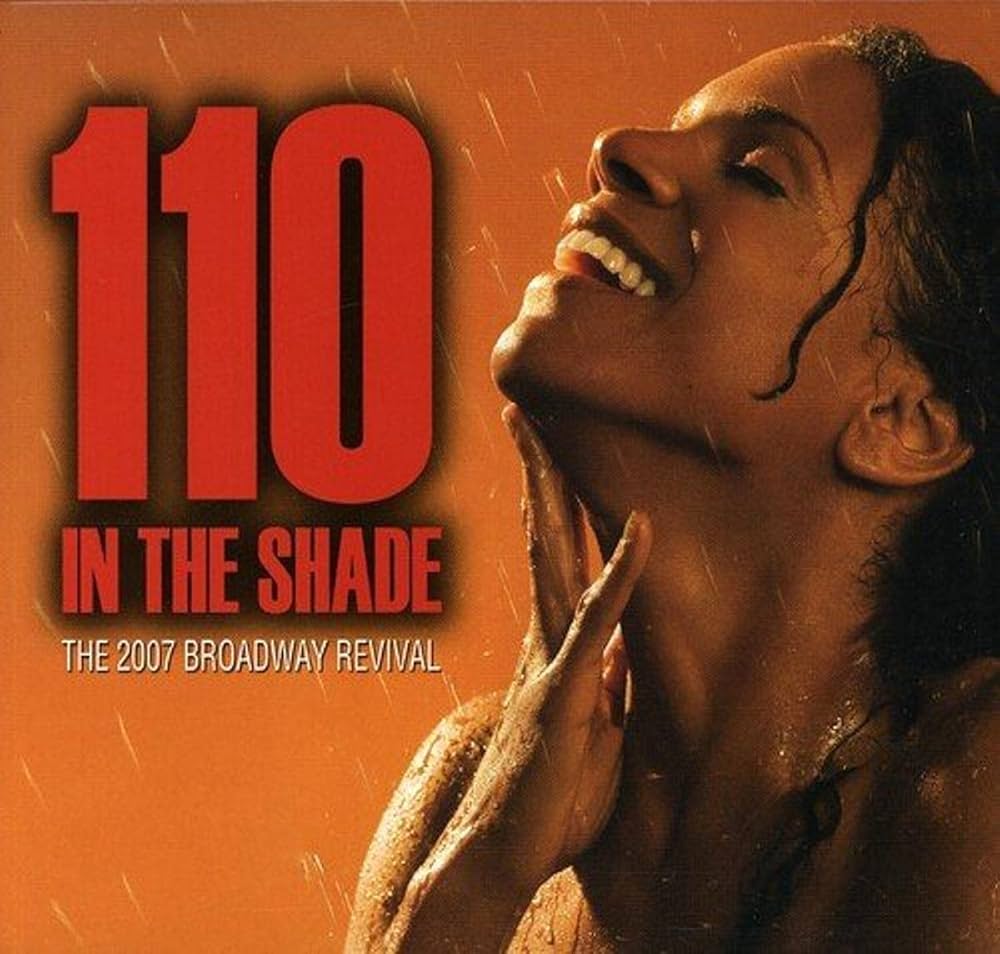
The show was revived in 2007 by the Roundabout Theater Company opening on May 9, 2007. In charge of this revival was director Lonny Price, designer Santo Loquasto, sound designer Dan Moses Schreier, musical arranger David Krane, and musical supervisor Paul Gemignani. The cast featured star Audra McDonald along with Steve Kazee and John Cullum. The show was ran for 27 previews and 94 performances before closing on that same year.
Unfortunately, the show was met with mixed feelings.
I hope you learned something new! check out some of my other blogs and learn more about the world of musical theatre 🙂 See you later!
At this moment, you can stream it on Pluto TV and Amazon Prime.
Or, you can rent it on YouTube, Apple TV, or Fandango.
Please read "The Plot" section above 🙂
49 years old.
No, but he did audition for it for the role of Jimmy Curry.


